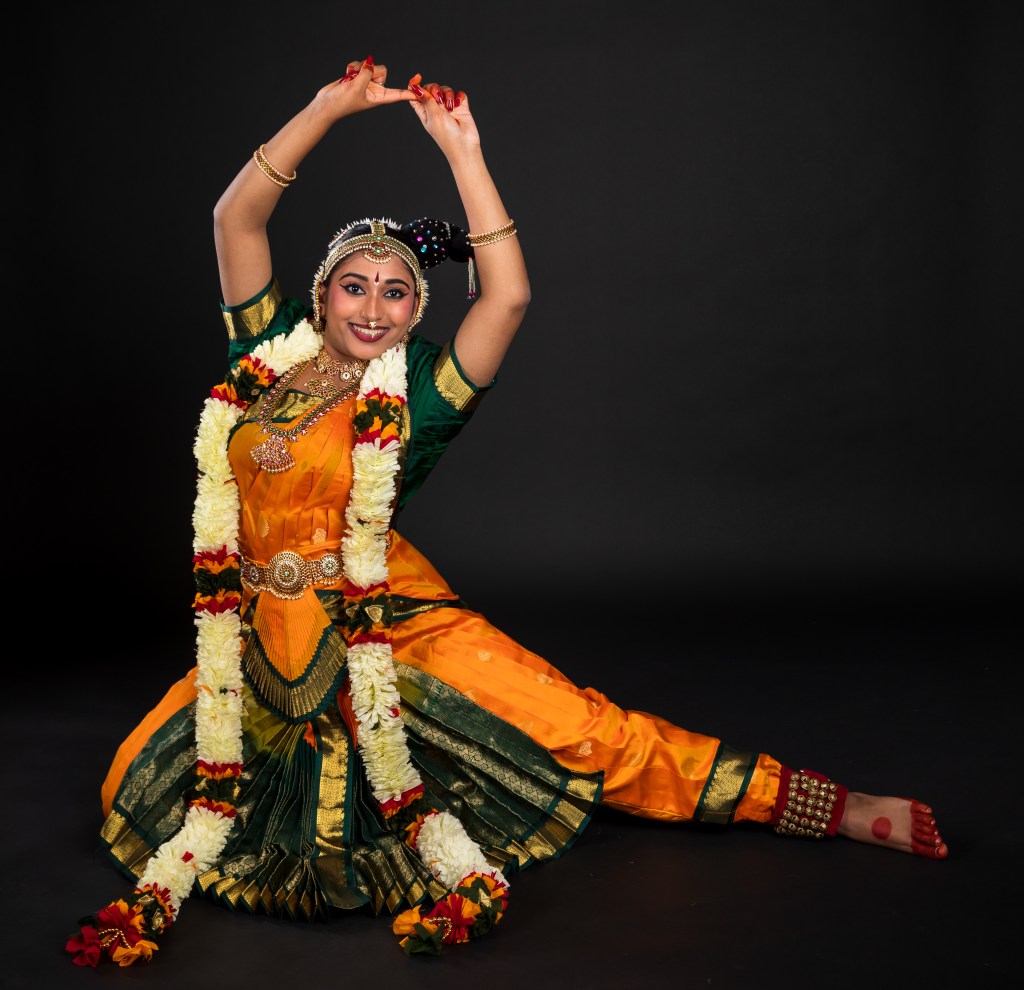
Thillana is marked by its features, which are crisp and exhilarating pure dance or nritta followed by sahityam. It is typically performed at the end of a Bharatanatyam performance. The thillana is characterized by fast-paced footwork, intricate rhythms, and a repeating melody. It is often set to a Carnatic music composition that features intricate percussion accompaniment. The Bhoopalam Thillana in Bharatanatyam is performed with crisp, energetic movements, showcasing the dancer’s technical agility and command over rhythm. It begins with a series of vibrant jatis, where the dancer executes precise footwork, angular arm movements, and dynamic poses that emphasize symmetry and strength. The poses often include araimandi (half-sitting stance), alapadma (lotus-shaped hands), and dramatic body extensions that highlight grace and geometry. The rhythmic sections are marked by leaps, spins, and sharp transitions, creating a visually arresting experience. In the sahityam section, the dancer may briefly switch to abhinaya (expressive storytelling), using gentle facial expressions and flowing gestures to depict a deity or poetic sentiment, usually one of serenity or devotion, in keeping with the calm mood of Raga Bhoopalam. The choreography balances rigor and refinement, moving seamlessly between stillness and fluidity. Overall, the Bhoopalam Thillana is a radiant, celebratory finale, leaving a lasting impression through its lilting rhythm, stylized poses, and lyrical elegance.
 Sheshfika.net